
Milan, Italy · Since 1901
One fresh cup.
A world of espresso.
Luigi Bezzera helped shape the way we make coffee—and the culture around it. From a fresh serving prepared to order to a name recognised around the world, this is his espresso story.
1901 · A fresh approach
Prepared for the person who ordered it.
At the turn of the twentieth century, inventors were searching for faster ways to prepare coffee. Luigi Bezzera made a decisive contribution with a machine designed to prepare fresh servings directly into the cup.
His patent describes the difference clearly. Coffee prepared in a large batch loses freshness as it waits to be served. Bezzera’s system prepared the coffee for each cup separately, preserving the aroma of a freshly made serving.
His invention, the brewing group and removable filter holder, made this a practical routine: load the coffee, lock the holder into the group, brew and replace the grounds for the next customer. A sequence that is being used by baristas all over the world today.
Early models included the ‘tipo gigante con doppio rubinetto’, followed by the distinctive Vittoria Alata.
- 1901
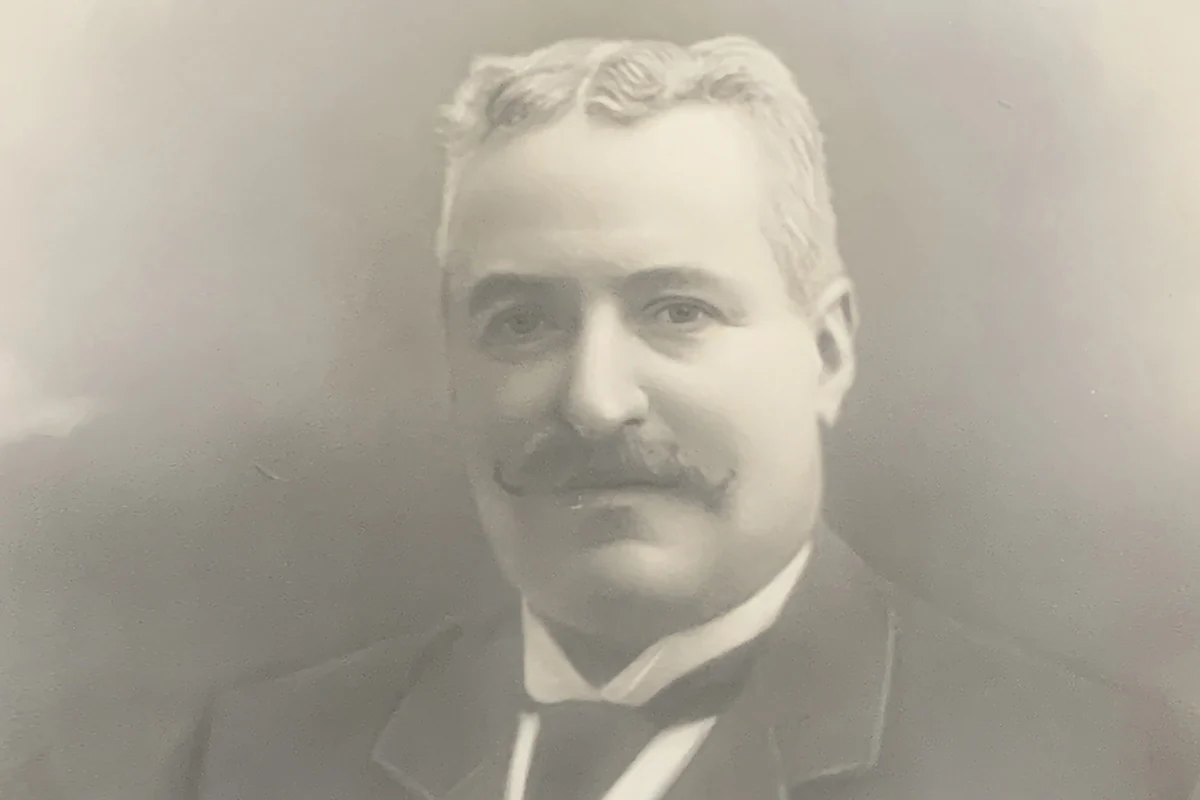
Luigi Bezzera
A fresh serving. An invention that starts the family story.
- 1906
A name on the world stage
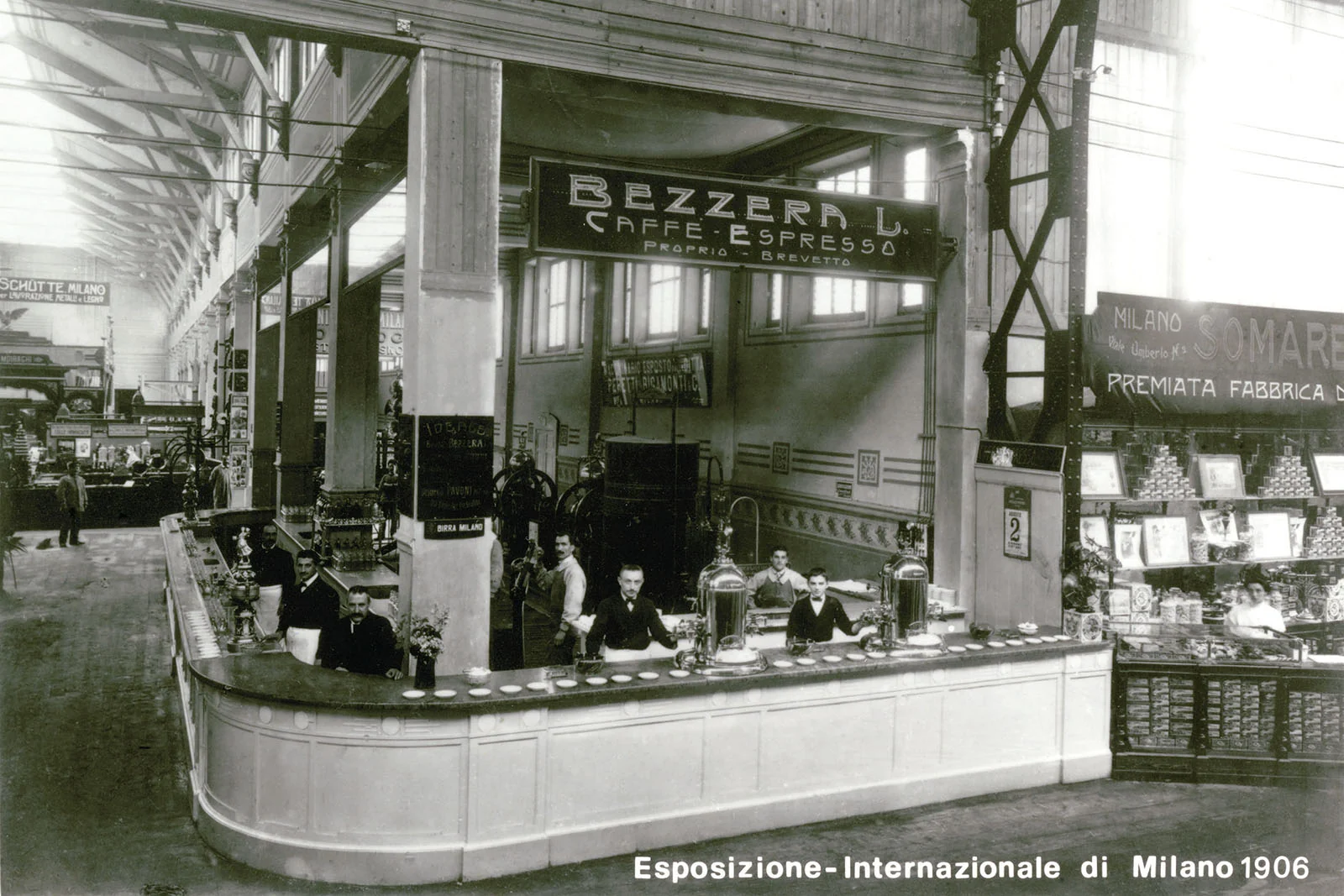
‘Caffè Espresso’ above the Bezzera stand in Milan.
- 1922
Giuseppe Bezzera
Luigi’s son carries the business into its next chapter.
- 1951
Rosita Cardano Bezzera
A woman at the helm of the family business.
- 1961
Guido Bezzera
Nineteen years old, with his sights on new markets.
- 2001
Luca Bezzera
The fourth generation and a wider international outlook.
- 2026
125 years of Bezzera
Four generations. A story still being made.
1906 · The name that stayed
He helped make ‘espresso’ stick.
At Milan’s International Exhibition in 1906, Bezzera’s invention met an international audience beneath a striking sign: ‘Caffè Espresso’. The photograph brings the machine, the name and the people serving the coffee together in one unforgettable scene.
The expression had appeared in print before the fair. The exhibition gave it a prominent place before an international audience. Bezzera helped give a lasting name a visible place in the new coffee culture.
From the early brewing group to the E61
A foundation for what followed.
Bezzera’s brewing system helped lay the foundations for generations of espresso machines. His innovation helped bring freshly prepared espresso to an ever wider audience.
The coffee itself continued to evolve. The high pressures and crema associated with today’s espresso arrived later. In 1961, the E61 brewing system marked another development, using an electric pump and a heat exchanger to deliver fresh brewing water under pressure.
The E61 was a later invention with its own engineering. Bezzera’s place in that longer story is his pioneering use of a brewing group and removable filter holder: prepare a fresh serving for the customer, directly into the cup.
The Bezzera family · Since 1901
The people behind the name.
An invention is only the beginning. Across generations, the Bezzera story continues through the people who took it forward, the places where machines were made and the models that marked each era.
Choose a photograph or a name to discover the story behind it.
- 1901Luigi BezzeraThe family story begins in Milan, with a new way to prepare fresh coffee directly into the cup.Read the story
An invention becomes a family business.
In 1901, Luigi Bezzera patented his coffee-making system in Milan. Its brewing group and removable filter holder made it practical to prepare fresh coffee for each customer. The family’s first chapter begins with that everyday sequence: fill, lock, brew and prepare for the next serving.
The early machines were handcrafted in several sizes. Among them was the ‘tipo gigante con doppio rubinetto’, followed by the Vittoria Alata. In 1906, the exhibition stand in Milan brought Bezzera’s machines and the name ‘Caffè Espresso’ before an international audience.
From the Bezzera family archive
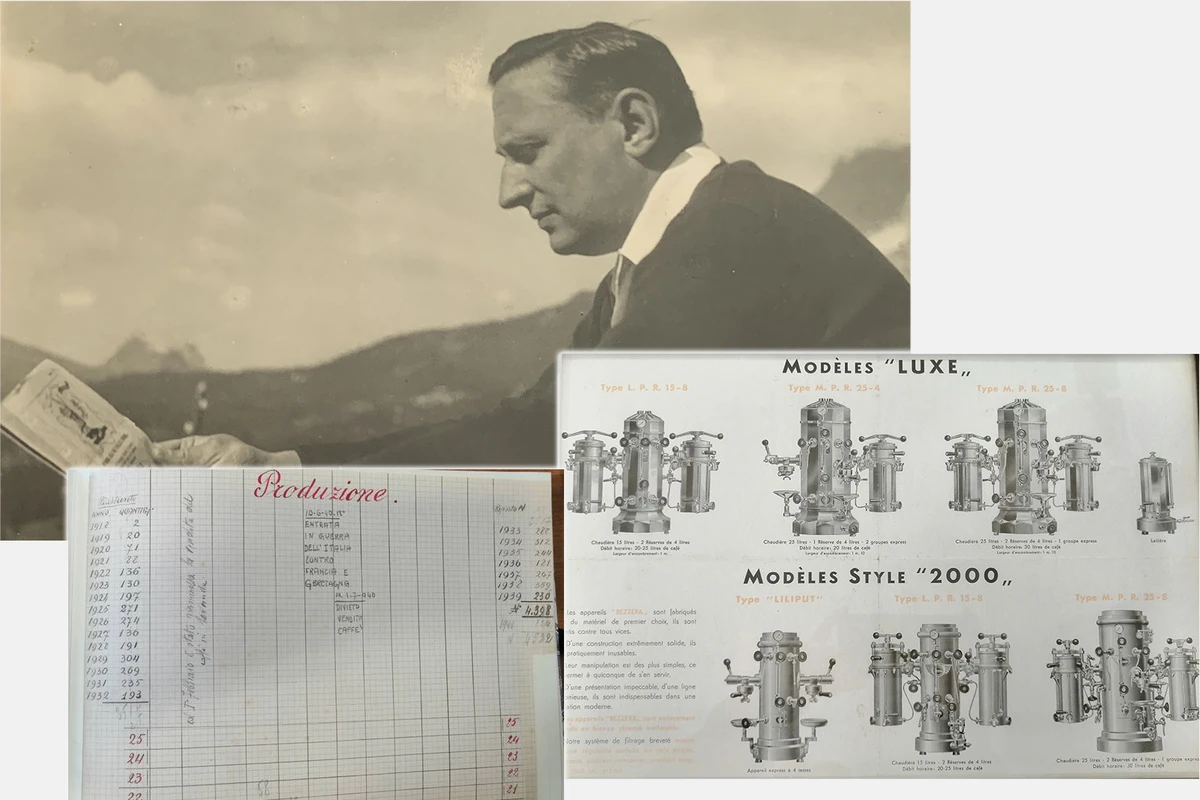 1922Giuseppe BezzeraGiuseppe, Luigi’s son, takes over. The early 1930s bring the Lilliput model.Read the story
A son takes the story forward.
Giuseppe was Luigi Bezzera’s son. He took over the business in 1922, carrying the invention into a second generation. Bezzera’s own history records growth in production and sales under his direction, even through the difficult years that followed.
The early 1930s brought the Lilliput model. Later, the war reached the company itself: an air raid in 1943 destroyed a third of its premises and forced a move within Milan. The family story continued through both new machines and the work of rebuilding.
Giuseppe also helped shape the company’s visual identity. He chose the Biscione, the serpent emblem associated with Milan, to express the connection between the family’s machines and their home city.
From the Bezzera family archive
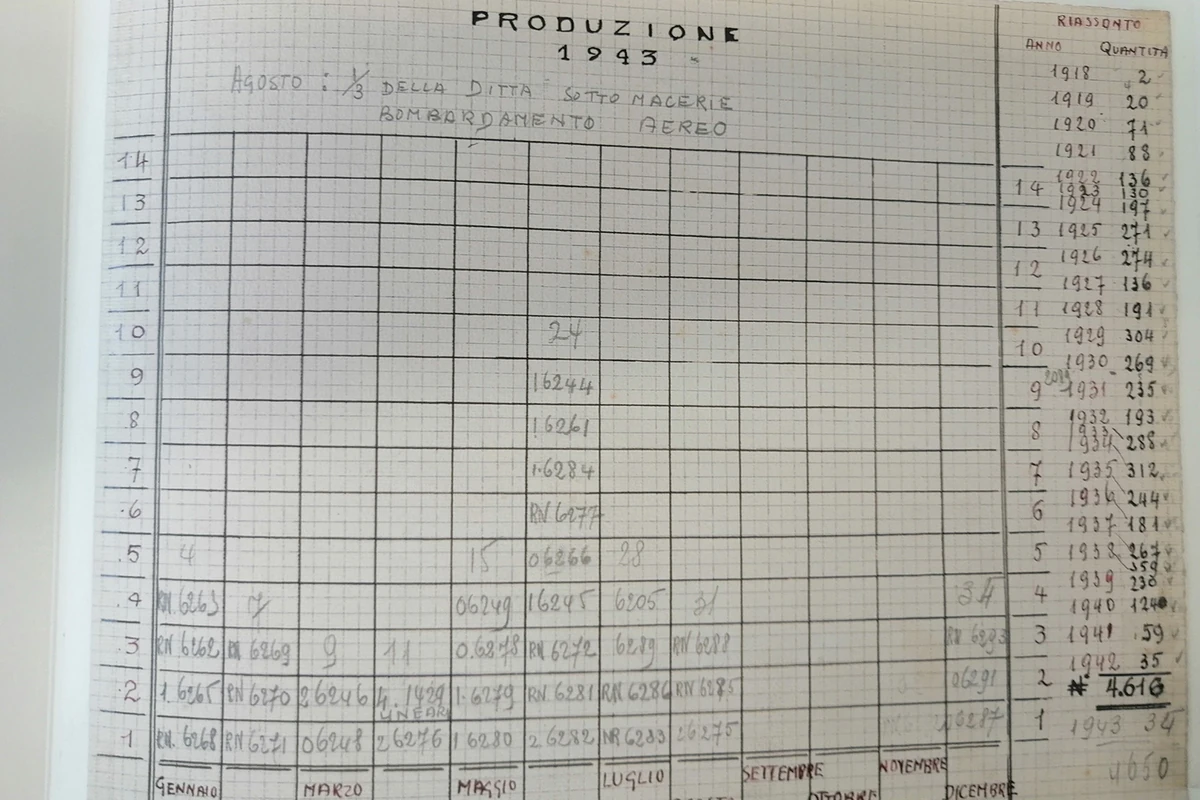 1943Rebuilding in MilanAn air raid damages a third of the factory. Production relocates within Milan’s Via Paolo Sarpi.Read the story
Continuing after the air raid.
The Second World War left a direct mark on the family business. In 1943, an air raid destroyed a third of the company’s premises. Bezzera moved from number 6 to number 90 on Via Paolo Sarpi, remaining in Milan.
The archive image is a production ledger, with an annotation about the bombing. It is a record of the factory’s working life during those years, rather than a photograph of the damage.
From the Bezzera family archive
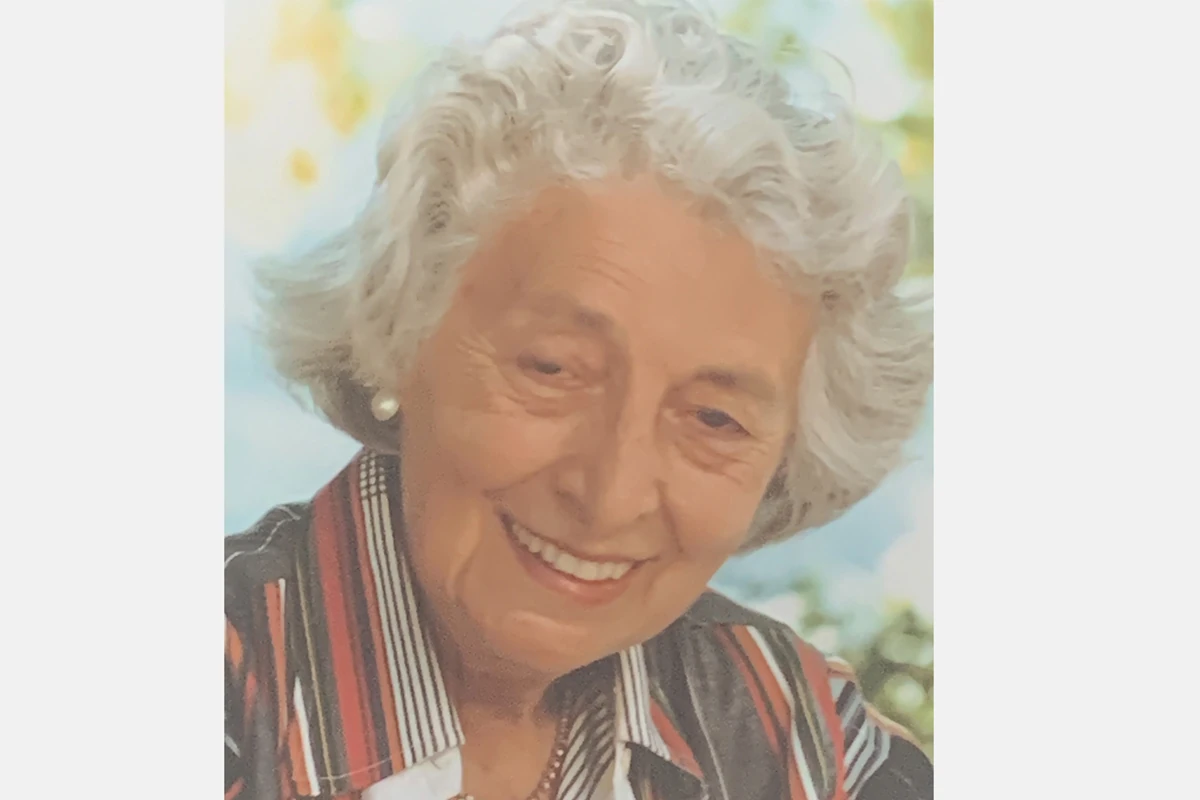 1951Rosita Cardano BezzeraRosita takes over after Giuseppe’s death, guiding the business through a difficult period.Read the story
Determination in a difficult decade.
Rosita Cardano Bezzera was Giuseppe’s wife. When he died in 1951, she took over the management of the company. Her place in the story is more than a change of name at the top: she assumed responsibility for the family business during a demanding period.
Bezzera’s family account describes the prejudice she faced as a woman leading an industrial business in 1950s Italy. It remembers her strength and determination in a largely male business environment, while the company was also under growing commercial pressure. Her chapter precedes Guido’s arrival at the helm in 1961.
From the Bezzera family archive
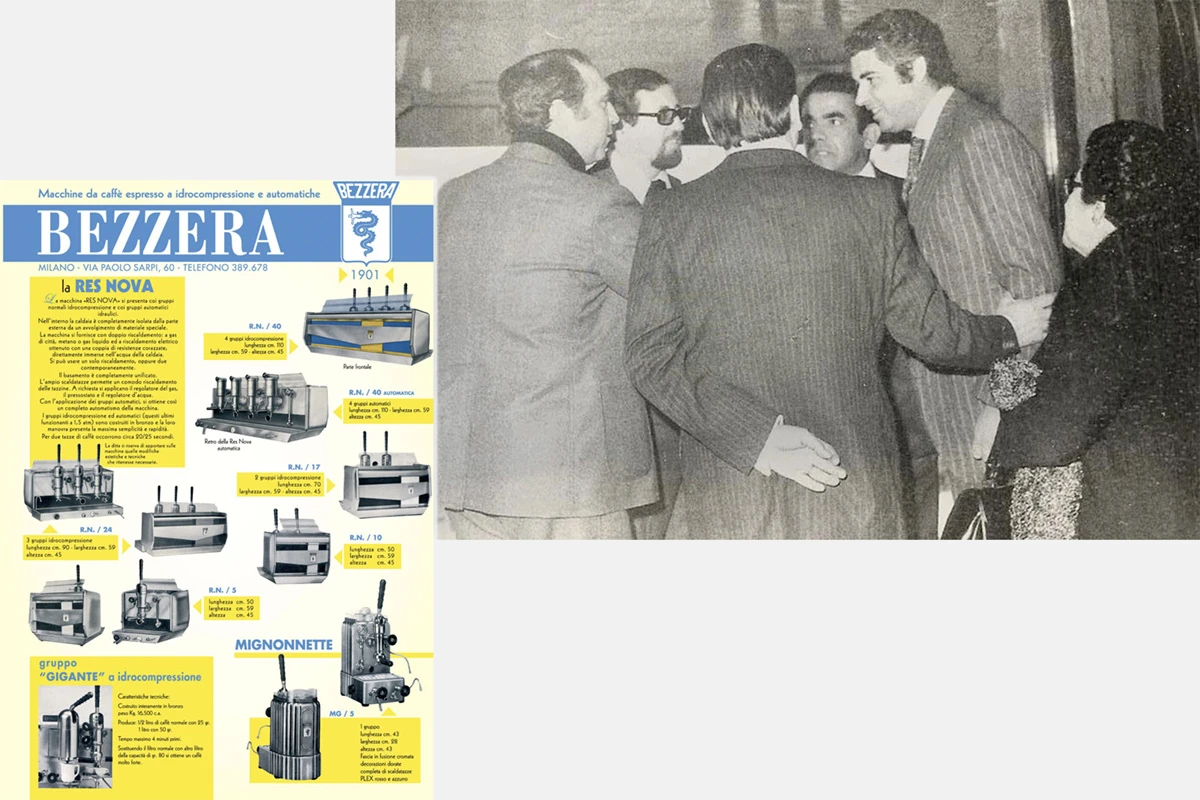 1961Guido BezzeraAt 19, Guido takes the lead. The Res-Nova accompanies a new focus on exports.Read the story
Nineteen years old. Looking beyond Italy.
Guido Bezzera was only 19 when he took the lead in 1961. The workforce had fallen from around ten people to just two or three. He began with a small team and the need to find a new direction for the business.
His answer was to look abroad, with Iran and Portugal among the first export markets. The Res-Nova expressed that new start in its name and design: rounded sides, brass trim and a light across the front. The move to Trezzano sul Naviglio in 1965 would give production more room to grow.
From the Bezzera family archive
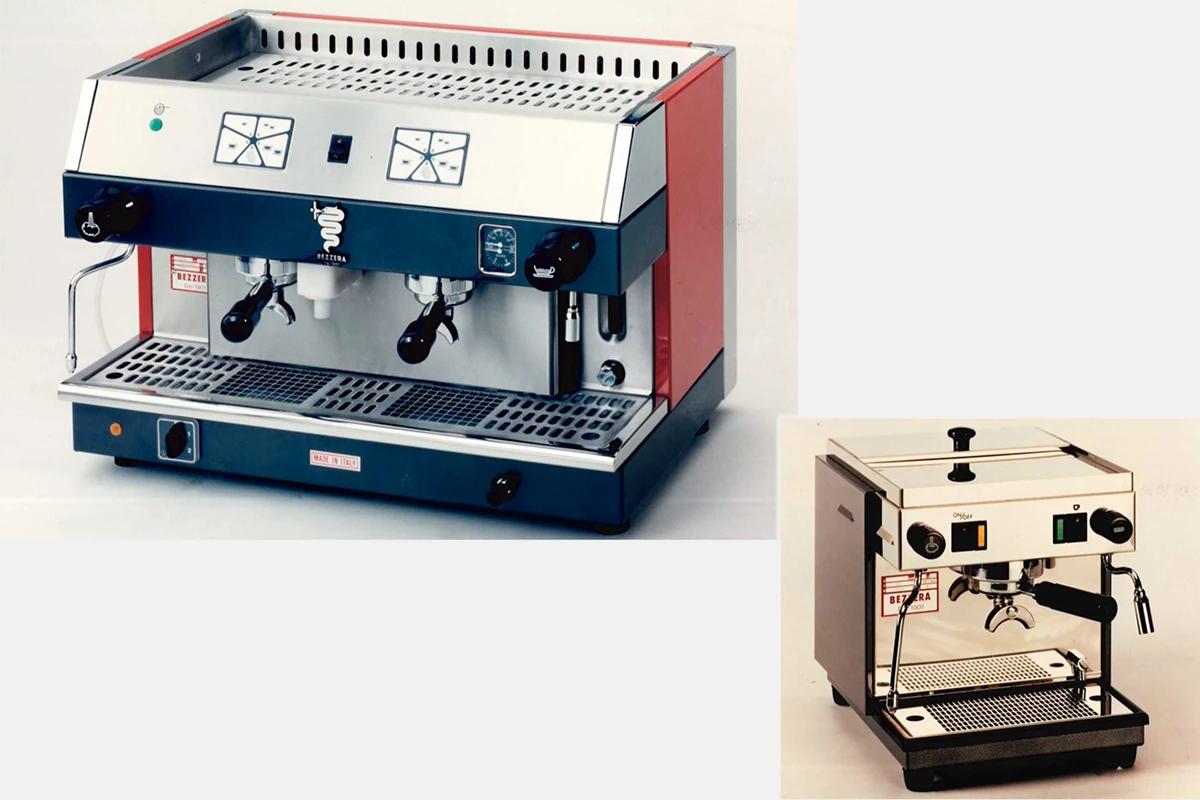 1965Room to growA move to Trezzano sul Naviglio brings investment in metalworking and greater production capacity.Read the story
A larger workshop for the next chapter.
In 1965, Bezzera moved from Milan to Trezzano sul Naviglio. New investment in metalworking and turning equipment increased what the company could make in its own workshop.
The move marks the growth from a small craft business towards a larger manufacturing operation. The two machines in the archive collage illustrate this chapter of the company’s development.
From the Bezzera family archive
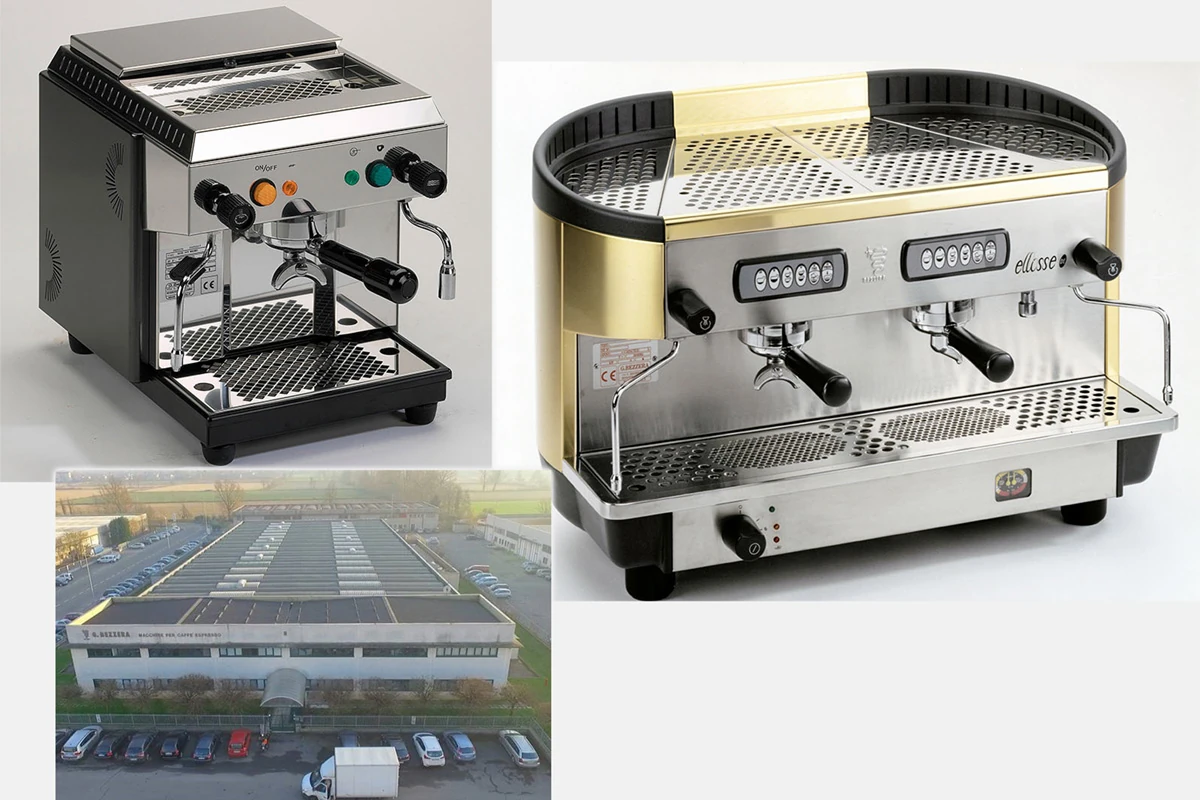 1995Rosate. Ellisse. BZ99.A move to a 6,000 m² facility in Rosate creates more room. Ellisse and BZ99 become milestones of this era.Read the story
Rosate becomes the company’s home.
Bezzera moved to Rosate in 1995, into premises covering 6,000 square metres. The change provided room for further growth, modernisation of production and development of the international sales network.
Ellisse and BZ99 are two of the machines associated with this period in the company’s history. The photograph brings the models and the factory together: a reminder that the story of a machine also includes the place where it is made.
From the Bezzera family archive
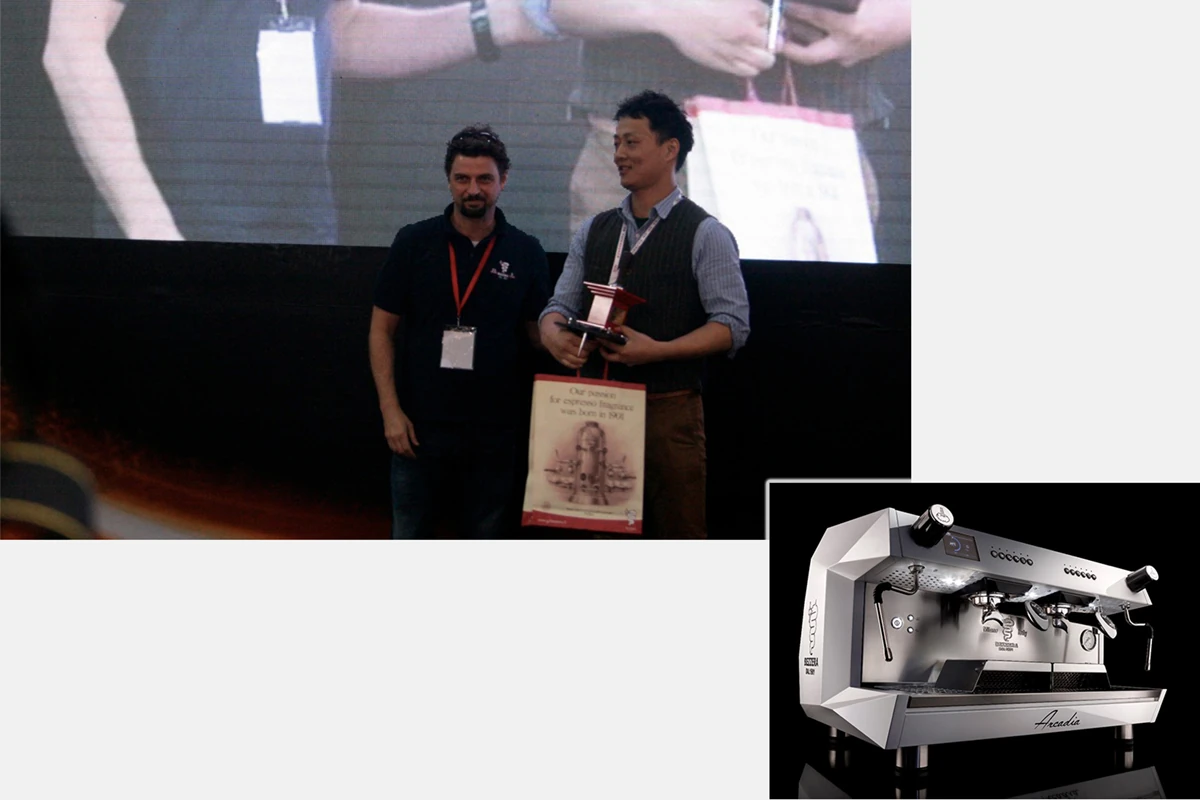 2001Luca BezzeraLuca represents the fourth generation, broadening international sales and the range of compact machines with professional components.Read the story
From Guido to Luca: the fourth generation.
Luca Bezzera, Guido’s son, represents the fourth generation of the family. Bezzera’s history marks 2001 as the beginning of his leadership chapter. After studying public relations and working in advertising, he gained experience in production and technical work, later managing the factory. The company’s monograph records his appointment as partner and CEO in 2017.
This chapter brought a wider focus on Asian markets and compact espresso machines built with professional components. The archive image pairs an event at World of Coffee in Milan in 2022 with an Arcadia espresso machine.
From the Bezzera family archive
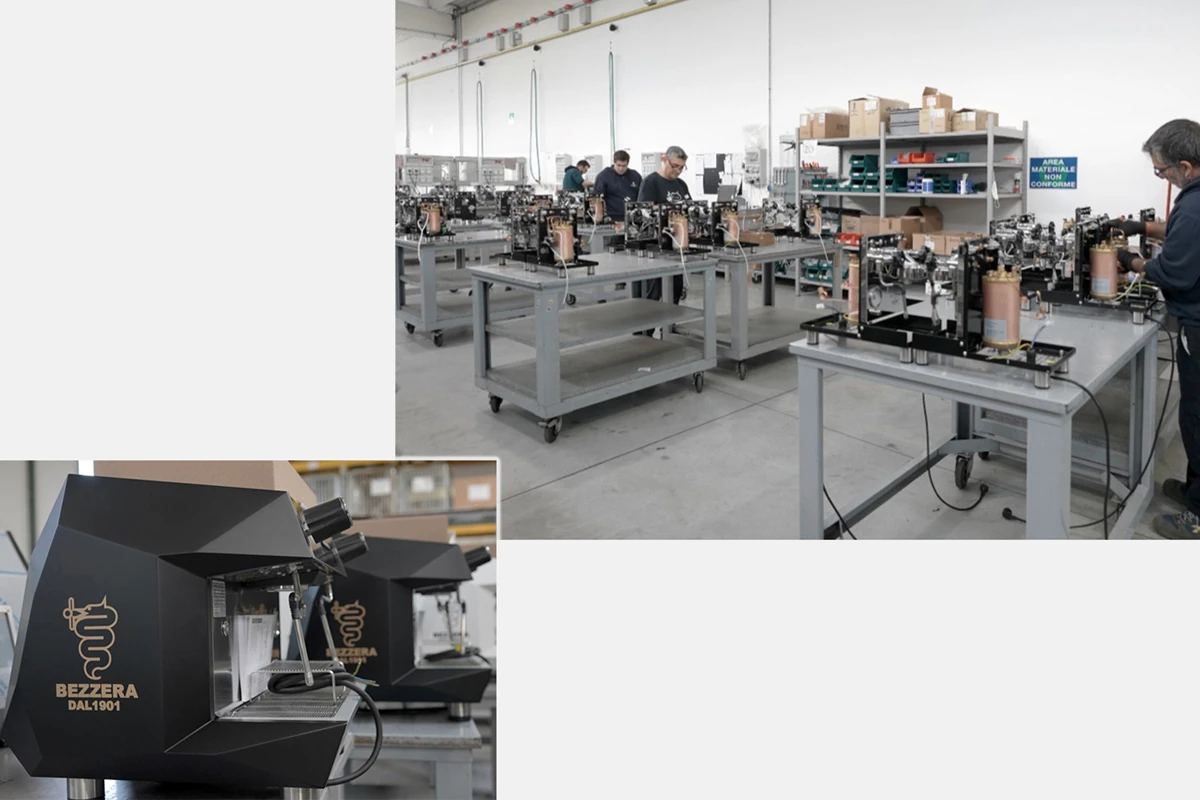 201710,000 m² of productionTwo additional buildings increase the production area to 10,000 m².Read the story
Making room for continued growth.
Two additional buildings brought Bezzera’s production area to 10,000 square metres in 2017. The company also became a limited company during this stage of its development.
The workshop photographs show what those figures mean in practice: assembly benches, components and machines taking shape. The family’s history continues through the daily work of designing, making and checking each machine.
From the Bezzera family archive
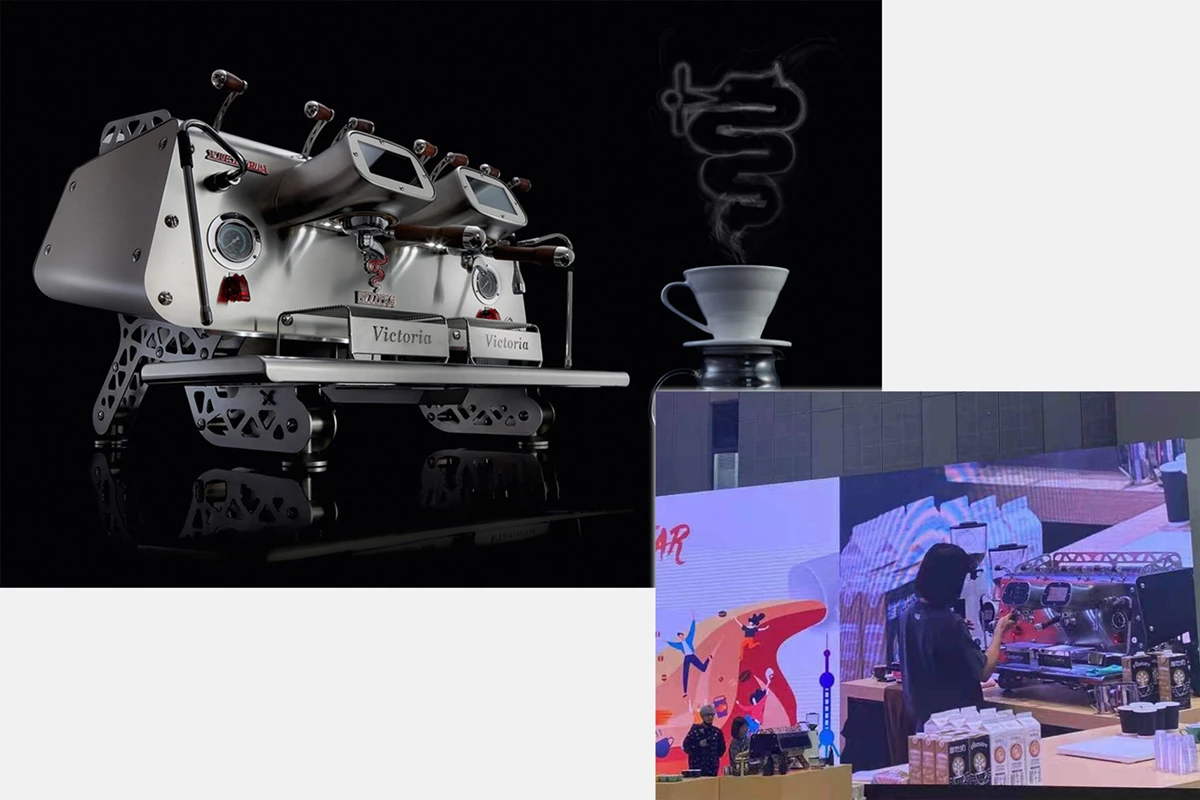 2020VictoriaVictoria arrives, bringing Bezzera into a new chapter of specialty coffee.Read the story
Victoria and the specialty-coffee chapter.
Bezzera introduced Victoria in 2020. The model brought a new expression of the company’s design and engineering to the world of specialty coffee.
Victoria’s international presence and association with coffee competitions connect this recent chapter to a long-standing theme in the family story: taking machines made in Italy to a wider coffee audience.
From the Bezzera family archive
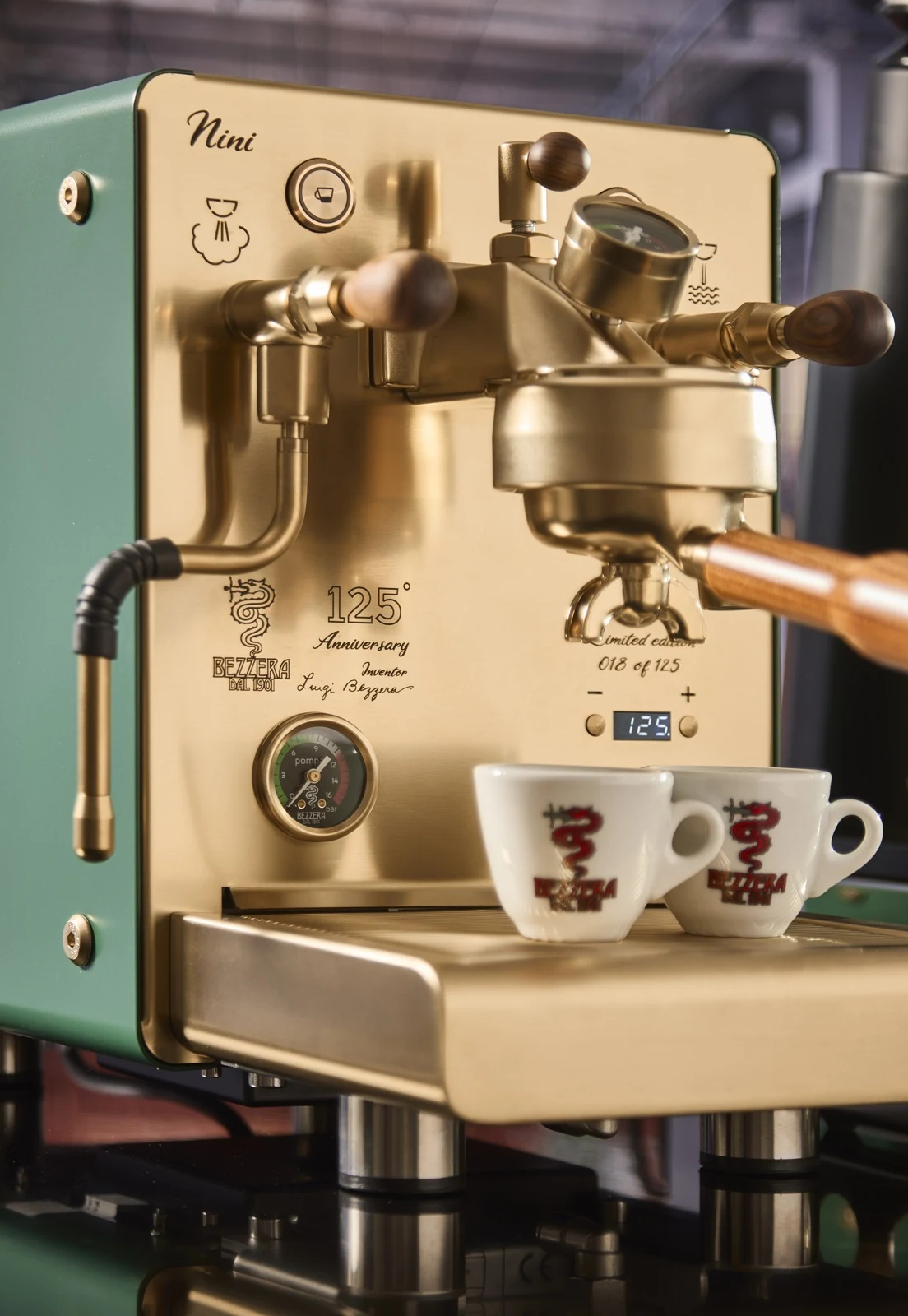 2026125-year jubileeA family milestone, celebrated with special-edition machines.Read the story
An anniversary with its eyes on the future.
In 2026, Bezzera celebrates 125 years since Luigi’s pioneering patent. Four generations connect that beginning to the machines made today. The anniversary brings special-edition machines and a new chapter in a continuing family story.
NINI Limited Edition · 125 years of Bezzera
 2026Amsterdam Experience CenterA new home for personal advice, hands-on discovery and lasting service.Read the story
Italian craftsmanship. Personal attention in Amsterdam.
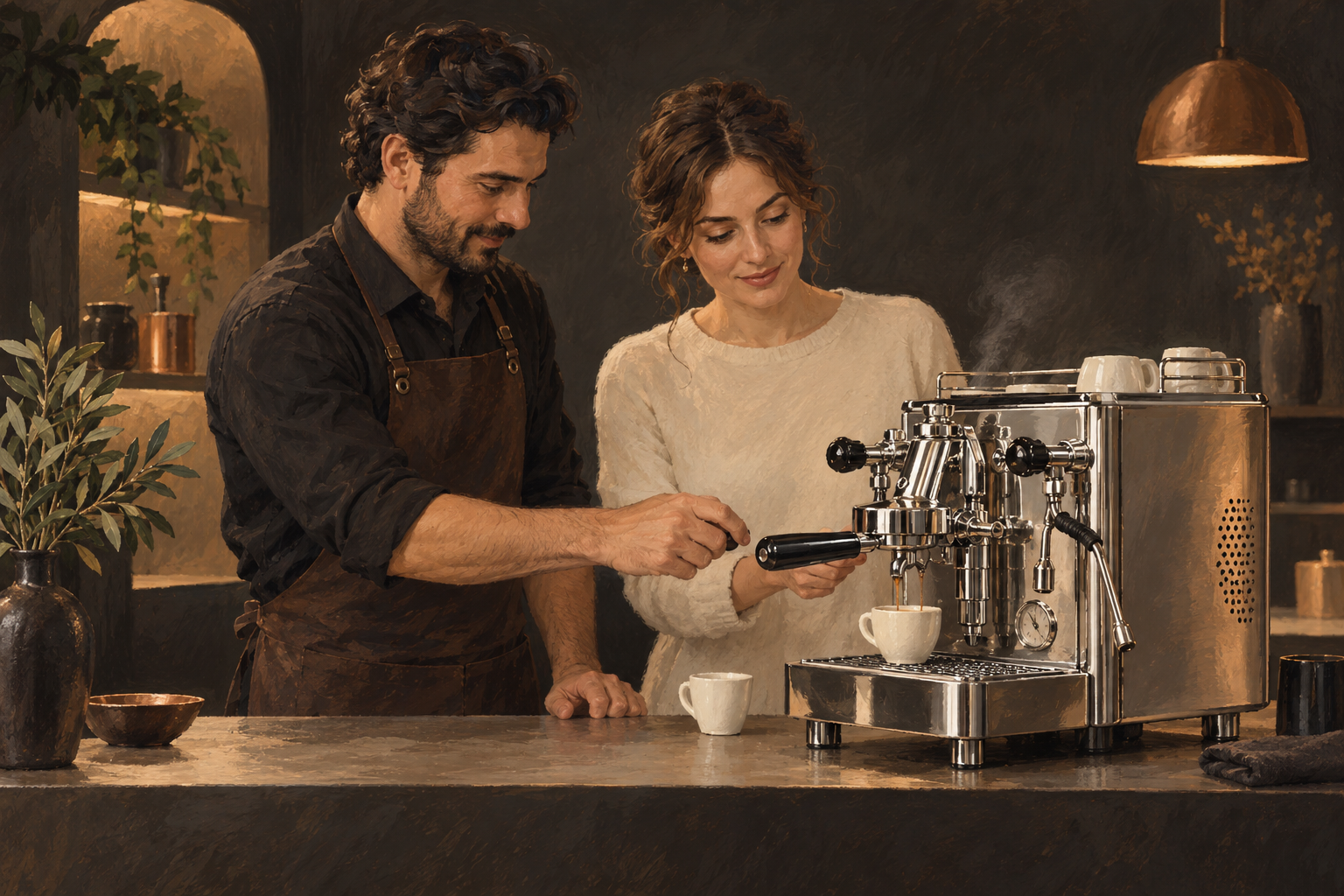
The Bezzera Experience Center at Rokin 118 opens on 20 November 2026. It brings machines, knowledge and service together: a place to compare, learn and find the right setup, with support that continues after your purchase.
Experience Center · artist’s impression
Historical milestones and photographs: Bezzera company archive.
2026 · The 125-year jubilee
125 years. Still unmistakably Bezzera.
A milestone worth celebrating. Special-edition machines mark 125 years of Bezzera: a tribute to the family’s origins, with an eye on the next generation of espresso.
Ask about the anniversary editions1901–2026 · Four generations
The story is still being made.
Luca and Guido look to the future with deep respect for the past. Their ambition is personal: to make machines the family can be proud to put its name on. Four generations on, Bezzera remains in family hands.
At the factory in Rosate, Italy, craftsmanship runs deep. Boilers, metal structures, copper pipes and brass components are designed and made in-house. From shaping the metal to assembling and testing the machine, direct control over production helps maintain the quality behind the Bezzera name.
That continuity is something you can see on the factory floor: metal being shaped, components taking form and attention given to the finished machine. History lives on in the daily act of making coffee.
Made in Italy · The Bezzera way
From raw material to your first espresso.
Three steps reveal the care behind the polished finish.
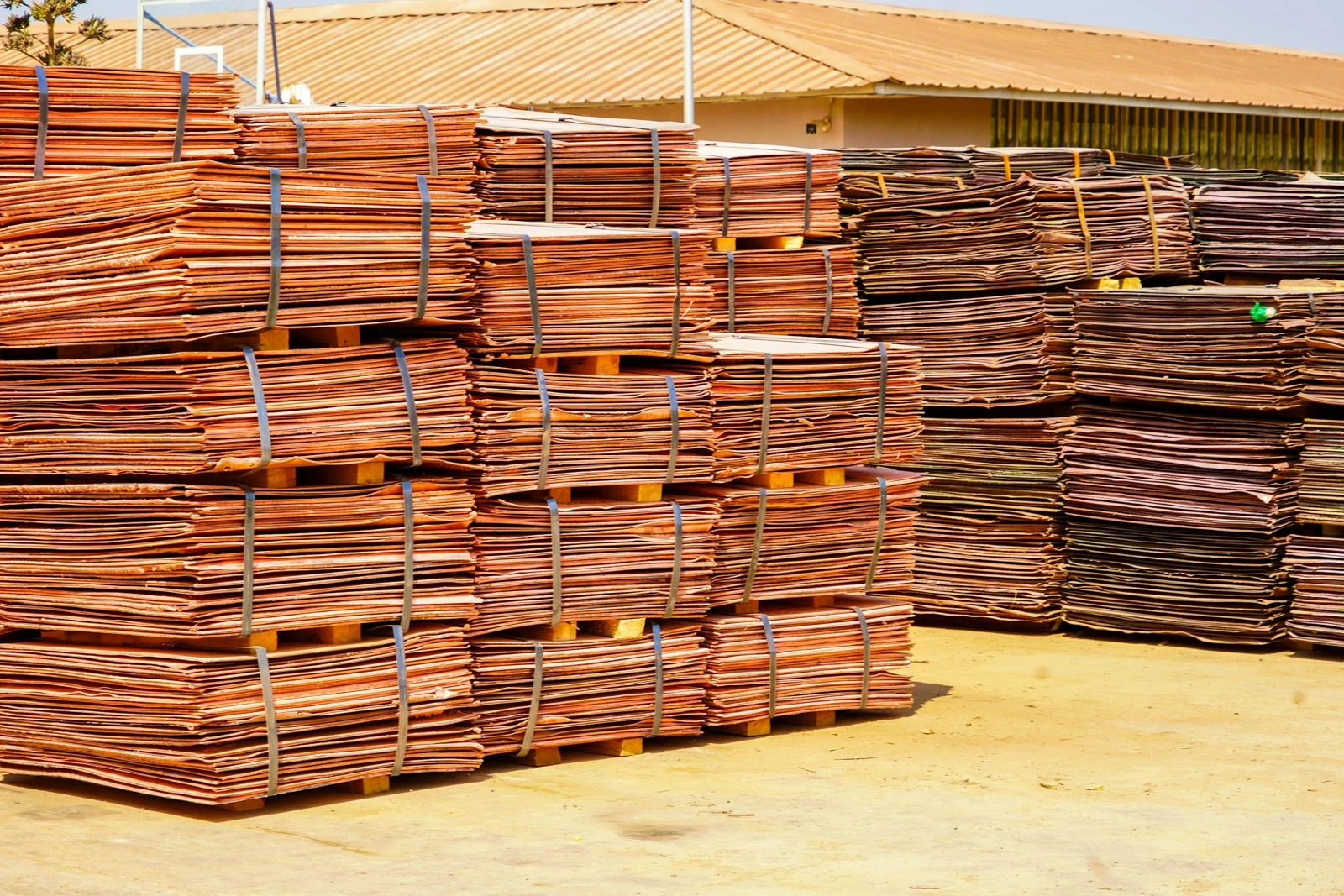
Illustrative raw materials · Chingola, Zambia · Sikwe Scarter / Unsplash It begins with the metal.
Copper and steel are the starting point. Material selection comes before the first cut, bend or weld.
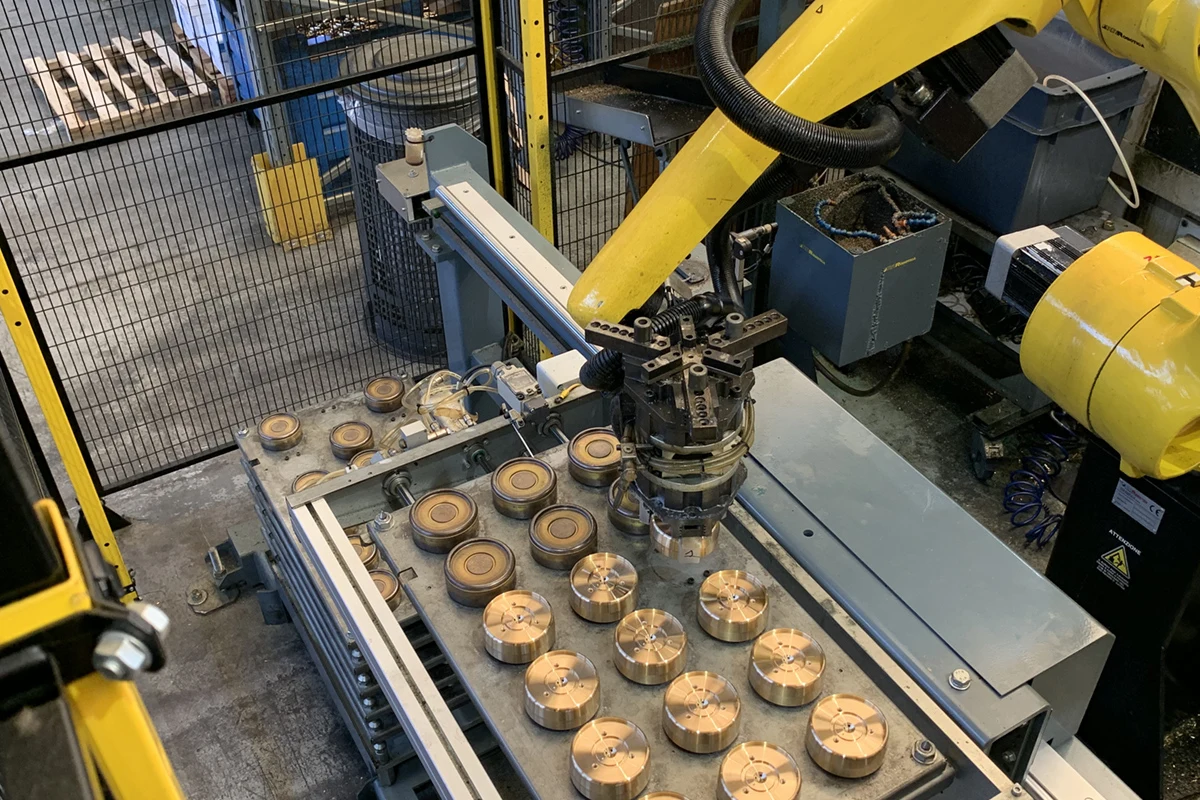
Component manufacturing · Bezzera factory Made into something precise.
The factory turns raw materials into working components: formed copper pipes, boilers, machined brass parts and metal structures.
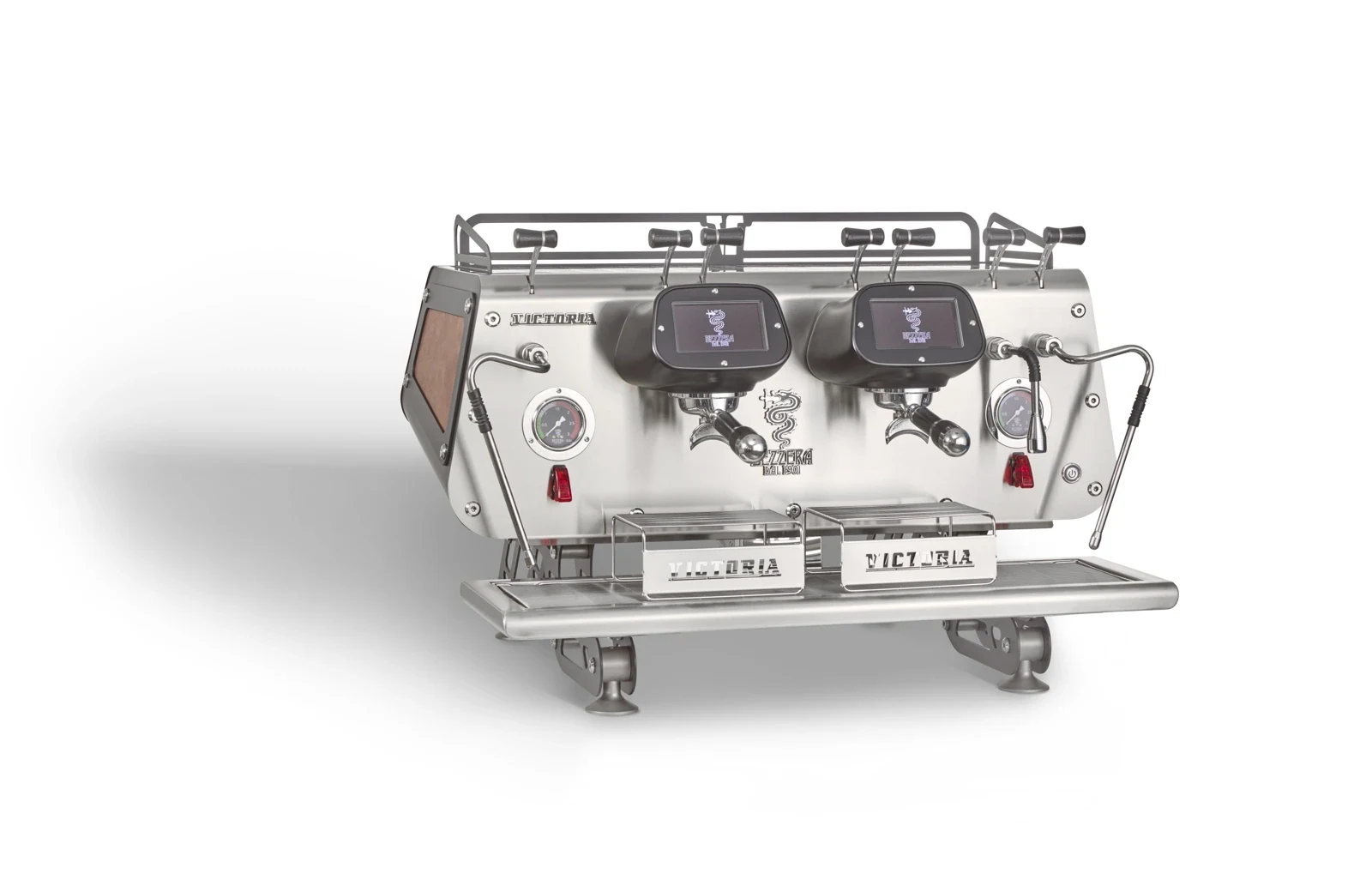
Victoria · the finished machine Brought together as Victoria.
Design, components, assembly and testing come together in the finished machine. Victoria carries that expertise to the espresso bar.
Bezzera Experience Center
Rokin 118AmsterdamYour next chapter begins on the Rokin.
The next chapter brings Italian craftsmanship closer to you. Compare machines, develop your skills and get personal advice at Rokin 118. Our aim is lasting quality in your cup, backed by knowledgeable service before and after your purchase.
- Personal advice
- Hands-on learning
- Service that stays with you
Opening: 20 November 2026.
Historical sources: Luigi Bezzera: original patent · Bezzera: our history · Bezzera: 125 years